


Having friends who are smarter than you is a fun game to play if you do it right.
Every couple of months or so, I link up with Alec Polsley at Long Island coffee shop we both enjoy for what starts out as a brainstorming session and ends up as a multi-hour conversation dissecting and expounding about the future, usually with Alec going off and yours truly doing his best to hang in there.
Alec’s tech background, comprehensive understanding of AI coupled with a thirst for knowledge and a willingness to experiment on his personal health creates the perfect storm for an interview candidate that can provide immense value to the readers, all the while keeping everyone engaged as well.
That’s a rare combination.
Some brief notes for qualification purposes: Alec is a 2x founder and growth and operations expert with a background in tech and Esports, with such accolades as having co-founded BrookLAN on his résumé, and currently is working on a software venture in the real estate space (all I’m allowed to say about that).
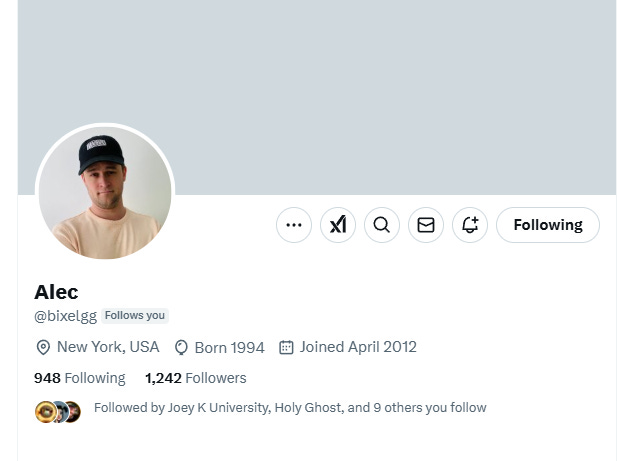
Alec can be found on Twitter/X @bixelgg, where he shares his thoughts and insights on many of the very same topics we discussed here today:
Let’s get into it:
J: Give us a little background as to who you are and what you’re working on currently.
AP: I’ve split my life between New York & Los Angeles.
Similarly, I’ve spent the first 5 years of my career building creator/thought leader software & the last 5 building a brick-and-mortar entertainment venue.
Polar opposites in many ways.
Where I currently am can be summed up in, “a new mission to make IRL better through software & AI.” Some through real estate, some through other projects.
J: You’ve always had incredible foresight into trends- not only that, you put your foresight into actionable work as well. What’s the key to taking something from the “idea” stage into something tangible?
That’s a place a lot of people get held up.
AP: Most people get held up from either doubting themselves or the “dopamine runs dry”. They run into some obstacle that sucks all the “fun” out of it.
You have to be a little delusional to build things as you must trick yourself to keep working through the hardest parts.
There are too many fun things to consume in today’s world that doing something as hard as creating can feel exhausting. Most people also get lost on the next step.
Most people don’t have any excuse in 2025 because you have a personal AI companion that will point you in the right direction, or in many cases fully build what you want.
Make a plan.
Don’t get distracted by shiny things along the way- pick them up, take them with you but come back to them later in the journey…is this metaphor getting through?
J: It’s getting through perfectly brother.
What did you learn from your BrookLAN experience, and what’s your outlook for ESports on a longer timeframe?
AP: Esports is interesting.
I think people get more value out of the community aspect than the games themselves.
Gaming will continue to grow, and the competitive side will become more approachable, though most people don’t want to sit in a bracket for 12 hours, so you’ll always have different levels of competition.
For every one person who will travel to an event IRL, there are 1,000,000 who will play ranked competitive online. I think that will grow naturally but the publishers are actively making games more addictive to the point where you don’t want to leave your house. Pretty ironic.
I believe that as the years go on, more and more people will become immersed in digital worlds. The way the average person views TikTok and Instagram today, I believe there will be a social mobile game that just consumes everyone. Most kids today use Fortnite or Roblox as a social hub, and I think there is a lot of value in that.
Building the venue itself taught me more about people and processes than I could have imagined working in tech. I never thought I’d also learn everything from A to Z about constructing a physical facility. From permits to electrical infrastructure, it was amazing to learn.
J: I really like that you mentioned people “get more out of the community aspect than out of the game themselves” because that’s so true.
What game was a community that you think is ideal to model itself after? Ideally with the least toxicity?
AP: Pokémon, which is the most pure community that exists.
And fighting games, they have a very similar competitive system.
Pokémon every year breaks records ever year for their regionals. Fighting games take over Mandalay Bay, massive venues.
The key is to let people play the game.
People want to hang out with their friends and play the games.
J: What fighting games are you talking about?
AP: Street Fighter, Tekken, in that vain.
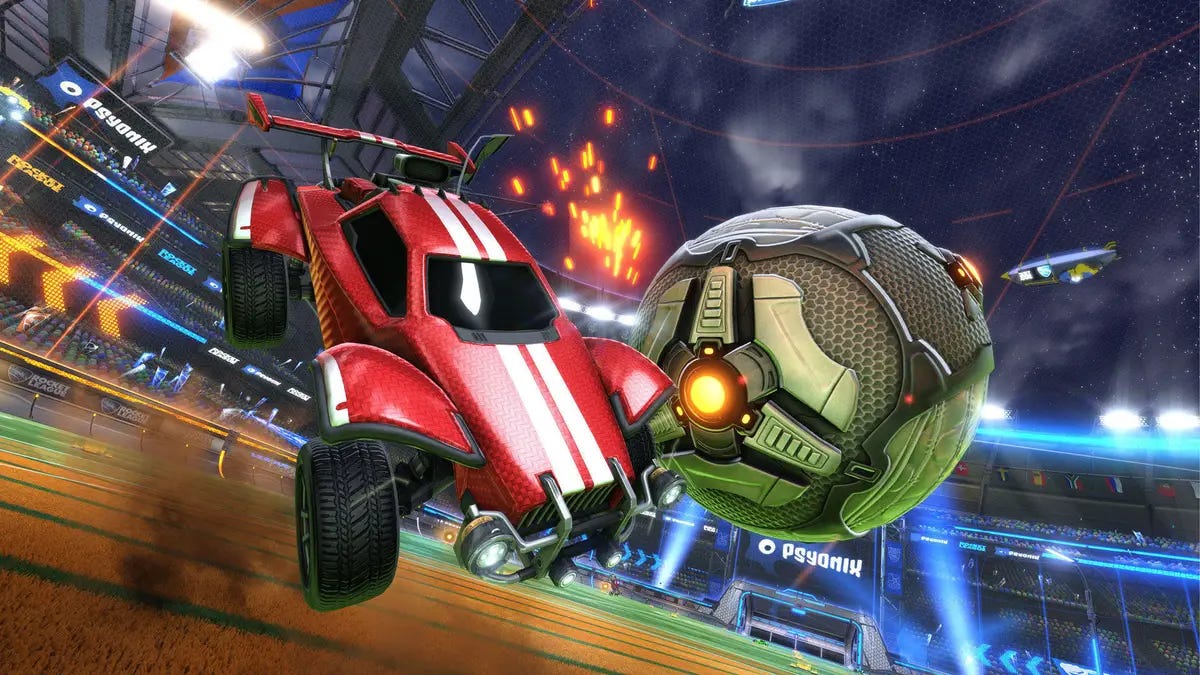
J: I got an IG targeted ad for video game addiction (I haven’t played anything in months now) but what game do you think was featured on the ad?
AP: Fortnite?
J: It was an Epic game but not that one.
AP: Rocket League?
J: Yup. Does that surprise you?
AP: If I was Epic I would sue. Gaming in general has become way more addictive and we should keep an eye on it.
J: During one of our many “coffee and brainstorming” sessions, you mentioned that you’ve gotten really into longevity and your fitness. Can you speak to that a little? What inspired that?
AP: For 30 years, I never cared about health. My reasons for getting in shape were always superficial—how I looked, what others thought.
I never saw it for what it really was: not dying.
Animals don’t need convincing to avoid danger—they instinctively steer clear of what could kill them.
But humans? We rationalize.
We say, “one won’t hurt,” even when we know better. Our intelligence becomes our downfall, allowing us to justify habits that slowly chip away at our health.
I kept it simple: whole foods (ingredients, not the store), no added sugar, no alcohol, and running/strength training five times a week.
I lost 30 pounds in 60 days.
My energy levels soared so high that even coffee started making me feel worse instead of better.
Two other things I believe reinforced it; having my first child & getting closer to God.
You want to live better for your kids, and it’s an insult to your creator to trash your body.
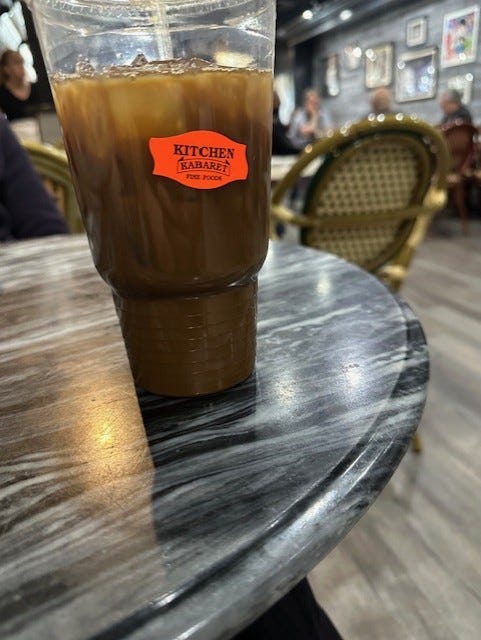
J: You’re sounding a lot more like my last interview- way more than I anticipated, but that’s cool how people can evolve. By the way, do you think there’s like crushed up Adderall or something in the Kitchen Kabaret coffee?
AP: (Laughs) Absolutely, no doubt in my mind.
J: What advice would you give to the average guy or girl who is looking to get more dialed in with their health and their body? What metrics do you see as being the most important to keep track of?
AP: Sleep. Almost every issue you have can be fixed with proper sleep.
Recent studies show that willpower diminishes from bad sleep- you won’t be able to hold yourself to anything else if you don’t get good sleep.
More important than duration, is consistency.
I don’t care if you’re 40 years old, give yourself a bed time & wake time.
Set your circadian rhythm. Do it for 1 week straight and you’ll thank me.
Our generation in particular hates sleep. We burn our phones into our eyes until 1:00 AM watching YouTube or Netflix. Stop it!
Genetics also play a huge role in health, as much as people don’t want to hear that. For example, there are short sleep genes, long sleep genes, and quality sleep genes that determine your perfect unique combination.
Most people are in a range though, so just follow the basics.
J: Can you give one more hack for a terrible sleeper (aka me)?
AP: Outside of consistency and rhythm?
Don’t drink alcohol and unplug from a screen an hour before.
J: AI is all the rage and the buzzword of the moment. You actually have a handle on it and don’t just yap about it for clout.
How does AI tie into your daily life personally and professionally, and how can people start implementing it into their daily lives?
AP: Our creation and adoption of AI is the single greatest accomplishment of our species. It is the culmination of thousands of years of human progress.
I’m happy to ramble about how I think the next 10-20 years will go, but I expect 2025 to be a major tipping point.
We have near-superintelligence in our pockets, and if you’re not using it I worry you will suffer in every aspect of life.
I recommend everyone at bare-minimum start using some AI model as your de-facto search engine. Current search engines push garbage. Browsing that blog post an intern wrote 7 years ago with fifty banner ads is not worth your time.
What is the most precious resource we have? Time.
What has most human technological progress been for? To either buy us more time (safety, healthcare) or save us time on things we don’t enjoy (microwaves, dishwashers, cars, highways, printers).
AI is just an ultimate culmination of that.
J: Between the video game addiction conversation and AI, do you think the Ready Player One future we’ve discussed is becoming more and more of a reality?
AP: On the current trajectory it’s inevitable.
If we keep going on the same trend we’re going on, we’ll solve all of the human problems except for happiness and natural disasters.
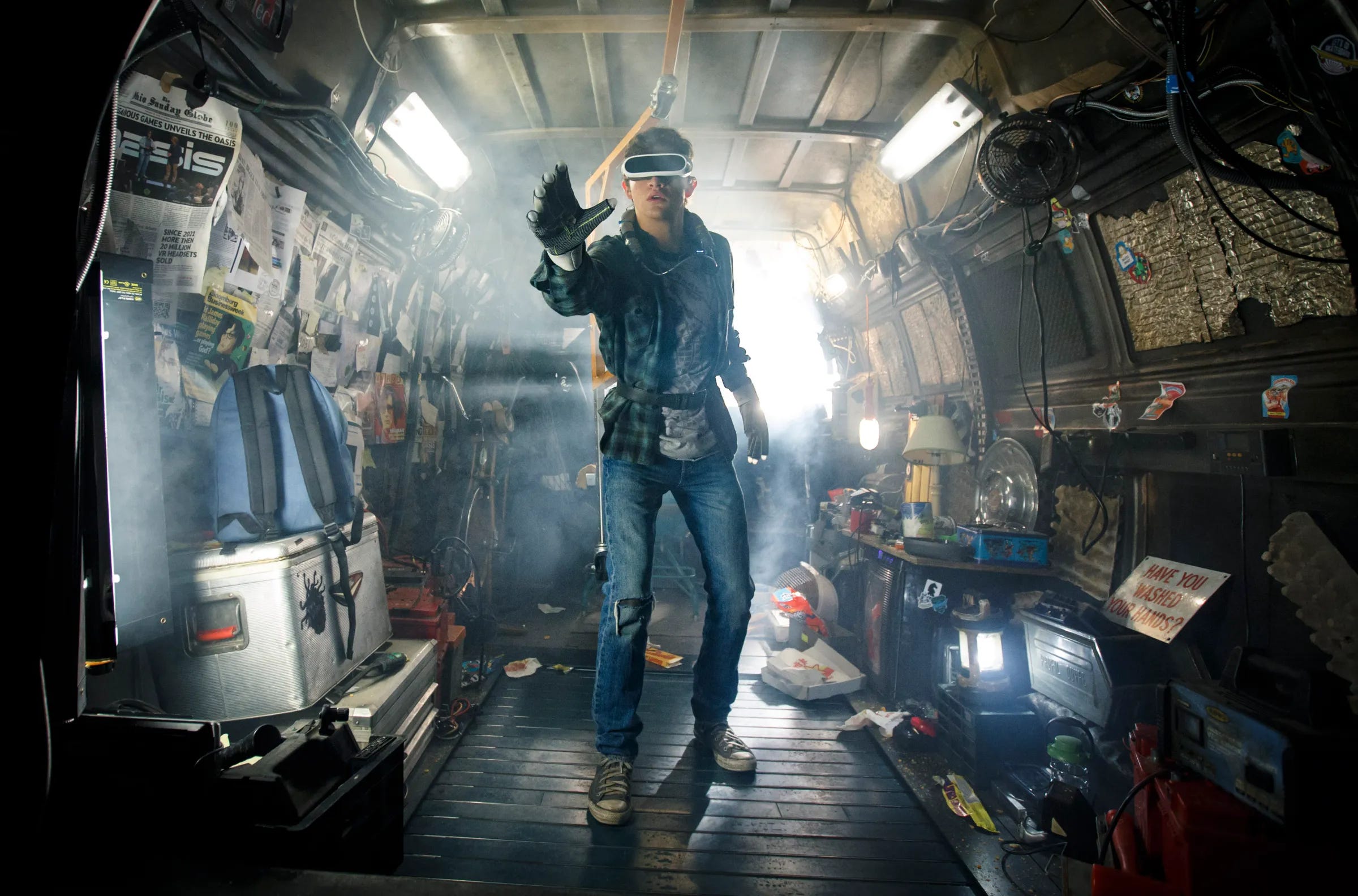
J: Even fertility? Keep going here, you’re on a roll.
AP: We have a chance right now to reverse course overall, and get back to health and humanity. Our food and health crisis is more of a spiritual one in my book than it is physical.
A lot of it has to do with greed, and we need the adults back in the room and say “We don’t F with the food”.
One thing AI will help with is that people won’t get away with lying as much.
Deploying AI systems are gonna give you the solution.
Like, how do you make Lucky Charms?
J: I love Lucky Charms.
AP: Ok, but why are there 50 other things in it?
Well, because this person gets a cut of a check, this person does too, etc.
The more you listen to AI, the more they tell you these things are poisons.

This is why I love watching local news.
J: Like News 12?! I’m a big News 12 guy.
AP: Yes, big into News 12, Eyewitness News etc.
News 12 can be wholesome, which I love. Most people are more obsessed with drama in the world more than what goes on in their own backyard.
I wish it was more popular.
J: Once all my dreams come to fruition, I want to buy News 12.
Make News 12 Great Again.
AP: I’m surprised with all the money around here that nobody has tried to do that. What would you change about it?
J: There’s so many things…I’d focus way more on civil type stories, real estate development, hearing from citizens at length and not just snippets. No hate, but we care about less about random house fires and more about downtown planning, commerce, small business, etc.
AP: So, people?
J: People! Exactly.
Alright, moving along. Who is someone that’s not a “household name” to the general public that you really look up to? What can we learn from him/her?
AP: Bryan Johnson – longevity guinea pig. Spends $2M a year testing himself with the big fan of his mission. He has a new Netflix documentary out. Great YouTube channel.
Rabbi Mannis Friedman – Great insights. On religion but also life in general.
Wes Huff – Biblical scholar. Great channel.
J: Ok, outside of Bryan Johnson, I don’t the other two- I appreciate that.
AP: Bryan’s great.
J: He has his haters, though.
AP: Yeah, and he loves it.
J: He was comparing his night time erection data with his son’s data on a Twitter thread the other day, that was weird to me.
AP: (Laughing) It’s because he knows.
See? You’re talking about it.
J: Ok, so its all calculated?
AP: It’s all calculated.
There’s very very real science behind the whole plasma transfer thing. You don’t even have to transfer with someone else, you just have to clean your plasma, it’s a little weird.
But is it as weird as you giving blood to a relative?
J: This reminds me of… have you ever watched Pumping Iron?
AP: Yeah.
J: You know the scene where he talks about “going in a quarter mile five seconds”, this reminds me of that. Outsiders don’t really understand.
AP: His mission is more around AI than anything else. We’re on the eve of birthing super intelligence.
When my grandpa was 20- could he picture the iPhone?
Super intelligence is gonna slingshot us into the future.
He does these thought experiments and one of them is what is gonna be our century’s contribution to the future.
So in 2500, they’ll say “what did they do in the 2000’s, how did it define humanity?”
Every century has its own thing, like the discovery of germs.
Imagine living before that- all of a sudden people are like there’s these tiny microorganisms that live, its insane.
Most people think new things are insane and not real.
Bryan always plays into the thought experiment.
His mission is don’t die.
Our biggest problem is time- lets solve this.
He knows he cant live forever, but how far can you push the envelope?
J: To invoke Arnold again- sounds a bit Skynet like.
AP: It does a little bit.
My biggest fear is that humans created this.
As God created us in His image, we took a wrong step and I’m afraid that we’ve infused that into AI.
J: Stop right there for a sec- isn’t it interesting that this is my second interview- two very different people, both young and successful- and both are invoking spirituality and God?
AP: Yeah, it’s a massive revival and it’s incredibly important. Currently in my life it is the single greatest thing id attribute to my peace of mind.
J: Just like my last interview- you’ve landed on a free space here, go off about whatever your heart desires. I’m less afraid of you getting me in trouble.
AP: This is probably a good place to continue the rant about AI.
I don’t do much writing myself, so I’ll cement this prediction here.
In the next 3 years I believe we’ll see a massive shake-up in the white collar job market. Office work, banking, legal, administrative, marketing, etc.
No, not everyone will lose their jobs, but I believe a huge percentage will- enough of a shift to cause a massive strain on the economy and its support systems.
Once that happens, I believe many blue-collar workers who grow the food, fix our roads, etc. are not going to be too happy paying into a system just so Jessica who worked on pitch decks can collect unemployment.
We already see a general massive divide in politics from these two groups (blue collar/white collar) and I believe we see a culmination where most blue collar workers just refuse to work or supply resources to cities.
It might sound insane, but this is my biggest fear of the next few years.
I believe these can be solved but I don’t believe we have enough conversations in Washington about the solutions.
Humans adapt well so we’ll figure it out.
Eventually robots paired with AI will move into blue collar jobs as well. But at the end of all of this I worry about a crisis of meaning.
What happens when all the problems are solved?
We’ll have so many people without jobs and unfortunately, I think this is where video games come into play- they’ve gotten so immersive that it will be the only real tasks people will be able to complete.
I believe we already have a crisis of meaning- specifically among young men- and games unfortunately become the duct tape holding them together.
It’s all very dystopian but I don’t see how it plays out any other way, assuming we continue at this pace and don’t get crushed by a massive solar flare or nuclear war.
Technically, through AI & robotics we can solve all of our issues aside from natural disasters.
So if you assume humans can adapt, and if we can check our ego at the door to the future, it will be a beautiful world.
J: You’ve got a very interesting story geographically speaking, especially from the outside looking in as a Long Islander. You’re born and raised in Santa Monica but now you make your home on the North Shore of Nassau County, LI- what are some of the biggest differences? Did you experience culture shock at all? Be blunt here if you can.
AP: Many people in New York dream of Hollywood; and many people in Hollywood dream of New York.
A lot of it comes down to culture.
In New York, if you’re not angrily go-go-going it’s seen as a bad thing.
Inversely, in Los Angeles if you’re not relaxed to a point of flirting with comatose, it’s a bad thing.
I honestly don’t know who’s correct.
Aside from that, I believe both places have seen massive declines over the past decade. The online world has caused more angst in the physical, which has led higher density places like New York & Los Angeles to feel strange.
There’s no trust. They’ve let their cities go to absolute shit because we’ve lost all sense of community.
Real community is knowing your neighbors so you pick-up trash when you see it next to their house when no one is looking. With the decline of religion, we’ve seen a decline of community. The social fabric is in decline. We’ve put other religions in their place and I don’t think it’s working out too well.

J: “Many people in New York dream of Hollywood; and many people in Hollywood dream of New York.” Is that your own?
AP: Yeah.
J: Incredible quote, another one I’m gonna steal.
AP: There’s really just a romanticization of both sides.
J: Alright, let’s close it out: I saw on IG you’re expecting your second child, which is just fantastic. How has fatherhood changed your life, outside of the obvious?
AP: I once heard someone summarize it perfectly: When you are single, your level of happiness is 0-10. When you get married, it’s -100 to 100.
It should make you happier in ways you didn’t know was imaginable.
When something bad happens to them, it’s also crushing in ways you couldn’t imagine before. Once you have kids, all limits are removed- unlimited happiness, unlimited possibilities for sadness.
I tell everyone have kids. If we can’t agree on anything else we should at least agree on continuing human civilization is a good thing (at least you would think).
J: Beautifully put. Man, top to bottom that was just great. The breadth of knowledge about AI, predictions for the future, the tie-in’s with spirituality and culminating it all with observations about family life.
AP: Thanks for having me, brother. I want to write, I keep telling myself I’m gonna start.
J: I would strongly suggest it.
Once again, thanks to Alec for joining me and doing this interview.
From Alec's perspective on AI and community to his thoughts on health and family, there's a lot to go through here.
Usually I’d cap this by saying “I hope everyone can learn a thing or two from that”, but I think there was about 10 or 20 nuggets of wisdom in there that I’ll need to digest and break down.
One of the main takeaways I observed here is the tie-in of faith and spirituality, which caught me by surprise.
Perhaps we're seeing a renaissance of spirituality and deeper meaning in modern life.
That does it for this time out- really enjoyed that one to be honest.
We’ll take a step away from interviews and step back into some first person type stuff next time out, as I’ve been conducting a social experiment this week consisting of nightly Tik Tok LIVE sessions.
Yes, really.
There’s been an awful lot to learn on there (good, bad, ugly) and the field report will be interesting to say the least.
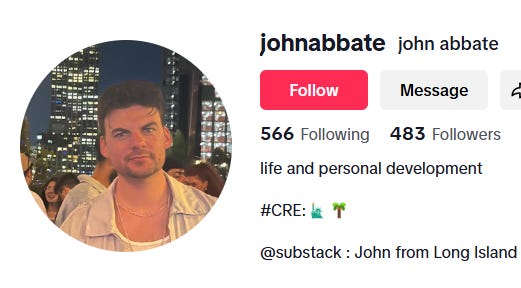
^ There’s the account if you want to follow along.
It was largely nameless and faceless and had 100 followers until a week ago, so if going Live 4x’s your following per week, who knows- maybe we’ll stick with it and see where it goes.
Always happy to be a guinea pig and talk to whoever.
(I even got our boy Elevator Charles to come on there one time)
Until next time out, be well.
💙
-John Abbate
11.2.2025