


Even the most disciplined out of all of us sometimes need extrinsic motivation to get going on the tasks that need to be done.
While those levels certainly vary from person to person, the need remains the same.
It’s a common refrain in the modern world- the lamentations of those unable to focus or “lock in” as desired. You can argue til you’re blue in the face that it’s never been more difficult to focus, and frankly you’d be right.
We have Tik Tok and IG Reel brain rot and ever-shrinking attention spans.
The dopamine overload of the myriad of notifications and DM’s etc etc is enough to turn what’s left our remaining functioning brain matter to mush.
Nonetheless, excuses or complaining won’t help us nail the to-do lists we embark on conquering each day.
As I often say, there’s a stark difference between complaining and stating a problem with the intent to fix it.
Today I want to talk about… “what’s your motivation style?”
That question reads a bit like the ever so popular inquiry “what’s your love language?”
(I’ve always found that question sort of funny- we’re supposed to narrow down our interpretation of something as nuanced and complex as interpersonal affection and love into the same 5 verticals, and that’s gonna work for all however many billion people in the world?)
Anyhow…motivation styles.
The idea for delving into this was spurned on by the fact I was on the business end of a public call-out by none other than our boy Elevator Charles.
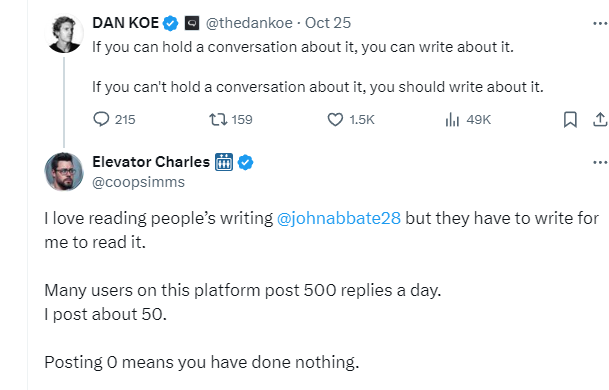
Look, I deserved it.
I had told Coop I was going to toss an article up and write a Twitter thread to go with it. I had some things come up and blah blah blah nobody cares.
Some people would have visceral, emotion reactions to this.
Don’t call me out in public!
If you have something to say, call me!
Well, they certainly wouldn’t qualify as people that would respond to this sort of motivation style.
For better or worse, I respond to the mano a mano direct call-out approach. Maybe it’s the ego, maybe it’s the Italian in me. I’m not here to break down personal psychology all the way, just the efficacy of motivational tactics.
Coop’s a bright guy, and he knew this would get right under my skin.
Was it the sweetest way to go about it? No.
Was it the most effective? Well, you’re here reading this.
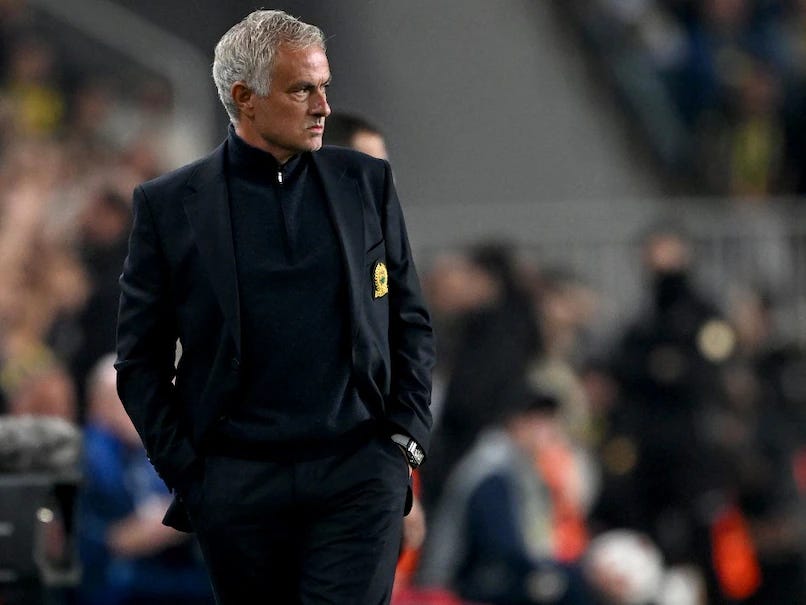
It was a ballsy high EQ move, shades of Jose Mourinho mind games in it.
A worthwhile tactic, but one that would’ve missed the mark on many other people.
How Would You Respond to Being Called Out?
This is a pretty good litmus test for your own personal motivation style.
How would you respond if an employer/friend/customer/client etc called you out about something, in effort to motivate you?
Now, you’ve gotta be honest with yourself here.
I don’t like the fact I take action in response to digs and challenges.
I find it to err on the side of immature egocentric BS. Still works. It is what it is.
So be ruthlessly honest with yourself, and let’s dig into it:
“I would’ve found it off-putting and not really responded”
Ah, let’s start off with the most well-adjusted answer.
This is probably the healthiest way to look at being poked and prodded, but what do you when it’s time to glean motivation from external sources?
If you’re this type, it’s likely you’re into collaborative effort and more of a “team player” type.
There’s a lot of nobility in that.
You’d be best served in an environment where you gain motivation not so much from direct words or instruction, but from the observation of the cohesive environment around you.
This is likely the “baseline” of motivation styles that the others emanate from.
“I would’ve cried”
Alright….more common than you realize in this world, and becoming even more so as the new generations enter the workforce.
Again, we’re not here to judge, but this is likely something that should be consciously worked on.
That being said, hyper communication would likely be your greatest motivator.
If there’s constant check-in’s and updates, there’s a constant finger on the pulse and progress can be monitored.
If you’re going to be fragile, you have to be ok with constant oversight as an alleviant.
Micromanagement is a headache for many, but if you’re prone to the (not so) occasional menty b, than it’s a good counter to your type, as constant assessment doesn’t allow for massive swings in performance, rather it’s all observed and incrementally adjusted.
“I wouldn’t have cared and also not done any work”
Here we go.
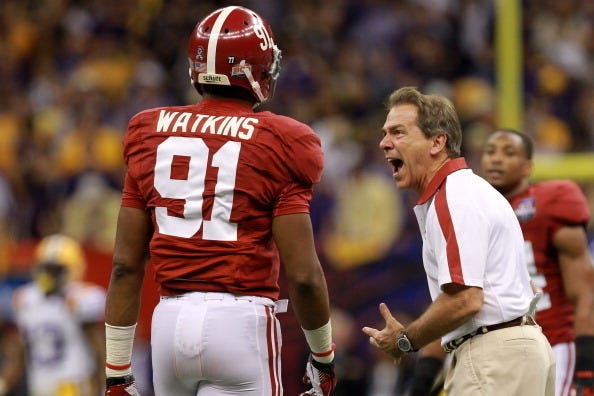
You’re a perfect candidate for a blistering, or as we in the hockey world affectionately refer to it- getting chewed out.
It’s exactly what it sounds like- a proper yelling, raised voice individualized call out with little regard for the recipient’s feelings.
This has fallen largely out of favor in recent years, whether it’s in the business world or the sports world.
However, it’s efficacy is nearly unmatched.
Sir Alex Ferguson (really harping on the former United managers today..) was notorious for his “hairdryer” approach, in which he’d obliterate almost anyone on his squad if they were not focusing. His track record of being the winningest manager in Premier League history speaks for itself.
Recently, there was an incident with this involving Boston Bruins forward Brad Marchand. Marchand turned the puck over brutally in his offensive zone, leading to a game-tying odd man rush in the final minutes of the third period.
He got eviscerated by his coach:
Naturally, as things are in the year 2024, there was some blowback on social media and in articles about whether this was appropriate.
Marchand himself came out and defended his coach’s actions, saying he rightfully deserved it. This is refreshing, and doubly so when you consider he’s a Stanley Cup winner and Hall of Fame candidate when his career ends.
If this is your motivation style, you have to make sure to have the competency to back it up- but I find that 9 times out of 10, these types usually do. If you’re a Stanley Cup winning caliber performer in whatever avenue of this life you’ve chosen, the powers that be won’t mind if they have to come and give you the “hairdryer treatment” once in awhile.
“If you call me out, I’ll drive over to wherever you’re at or storm into your office and…..%&^@#”
Okay, deep breaths.
First of all, this is luckily a very small minority of people (I’d say sub-5%), which is good.
However, if you’re in this bracket, it’s best to channel the unbridled energy we call aggression in a constructive manner. The best motivation for you would likely be the guarantee that you’ll be left alone as you desire to be, so try being clear with expectations from the onset.
If there’s clear communication about what’s expected and you perform, you’ll find that in whatever structure you find yourself apart of, they’ll be cool with you doing your own thing.
The desire for autonomy becomes motivation in and of itself.
“But John, it’s 2024 and work is remote and everyone is a hermit and everything is online and weird.”
Yeah, I hear you. In other words, a lot of us don’t really have the opportunity for external motivation in the ways that we used to, and digital comms don’t always hit the same based upon what you respond to.
I got something cooked up, dw.
Self-talk Frameworks for Personal Motivation
Look, sometimes we are all we have.
The “external” motivation needs to be self-inflicted through the modality of self-talk.
Let’s work through how this would work for different motivation styles, using a workout as the analogy provided.
For those those that like a challenge:
My people! Usually, since responding to this sort of tactic is rooted in the ego, you have to become your own challenger.
Don’t feel like lifting?
Go look at yourself in the eyes in the mirror and look at who you’re letting down.
Remind yourself that the same guys the same age who want all the same things with the same goals are probably working out today, and if you sit at home on your ass, they’ll get ahead of you.
If this is truly your motivation style, it’s all you need.
It’s corny, it’s out of a Rocky movie, it’s also remarkably effective.

For the normal people:
It really must be so nice.
Anyway, in this case, you’re likely more of the type to be involved in a run club or a class for your fitness- the collaboration and consistent familiar faces will provide both comfort and normalcy. The environment of like minds working towards a common goal will be enough to stoke your fire within.
If you’re stuck solo?
Try to envision that environment, or text a friend for accountability.
For the….more emotional types
You have to give yourself credit.
If this is you, then being ultra competitive is likely not in your nature.
Whether it’s working out as used in this example or another task needed to be done in life, remind yourself you’re being diligent and doing your best.
Lastly, it’s very beneficial to keep a log of your progress and achievements in a given endeavor, so when the waves of emotionality want to come crashing down and ruin the party, you have the safety of being able to reflect on your progress tangibly to keep you afloat.
If you need to be “chewed out”
In this camp, you can get away with what would likely be called more toxic motivational tactics. It’s not a total departure from the “Challenge” types, just more raw and less based on the self.
It can be as simple as telling yourself “If I don’t lift this, I’m a bitch”, or excoriating yourself psychologically until you’re able to complete the task at hand.
This might not be the healthiest or feel great, but if it’s what you need to get the job done and it’s what you respond to….then by all means.
5% Psycho people
First of all, I hope that you’re in the gym constantly and not just in my little analogy. I’ve found that everyone in this camp seems to be a competent, self-starter loner type. You know what needs to be done and have a tendency to do it.
If you need a little extra prodding, just remind yourself that the more you do what you’re supposed to, the less anyone else can interfere with you or tell you what to do.
Your performance provides your peace.
A Closing Note on Self-Talk and Motivation
When it comes to motivation, self-talk can be an invaluable tool when it comes to providing ourselves with the added “push” that the rigors of our daily lives require.
While there’s a myriad of examples, from MJ to Steve Jobs and beyond, self-talk at the end of the day becomes an exercise, much like motivation styles itself, that are tailored to the individual and what is best responded to.
You may find that you’re a blend of the styles mentioned above, and certain days and scenarios call for different types of methodology in regards to personal accountability.
The path of tying your inner monologue into your motivation style is one that only you can traverse, and whether it’s ugly or beautiful- roll with what works.
My all-time favorite example of self-talk motivation comes from none other than legendary Mr. Olympia champion Ronnie Coleman, who is a great example of this.
Ronnie cast aside more involved mental frameworks and mindset tactics in favor of a self-talk routine that was absolutely beautiful in both its simplicity and effectiveness:
He told himself that the weights were light.
I don’t think it gets any better than that.
Hope this helps and talk soon, especially before the insanity starts on Tuesday.
<3
-John Abbate